Payments captured at signing, matched to the invoice
Nagaris captures a client's payment details when they sign their engagement, then charges by direct debit, PayID or card on completion or on a recurring schedule, and matches each payment to its invoice. Direct debit and PayID cost 1% + 30¢, capped at $5 a payment.
Getting paid starts at the engagement
Lock-up builds when payment is an afterthought: the work is done, the invoice goes out, and the firm waits. Nagaris moves the payment conversation to the moment the client says yes. When they accept their engagement, they sign and set up payment in the same step, much like a hotel takes card details at booking.
Ways to charge
- On completion. Capture the details upfront, then charge when the work is done.
- Recurring. Set up monthly or quarterly billing for clients on a fixed fee.
- Traditional invoice. Send an invoice with several ways to pay, including PayID, bank deposit or credit card.
For a family group, billing follows the engagement: the group pays together, each entity pays its share, or you set your own split.
Matched, not reconciled by hand
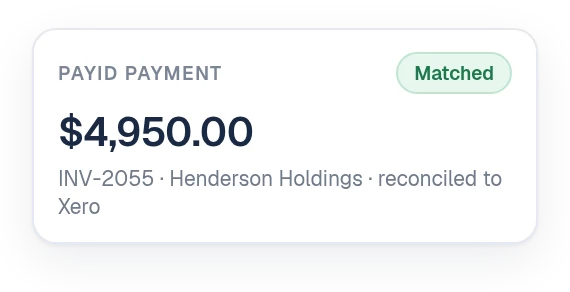
Direct debit, card and PayID payments are matched to the invoice for you. Auto-payment reconciliation is included in every plan. Billing and payment status then show on the Services list without anyone updating it.
Because the details are already held, charging on completion doesn't need a new request to the client.
Direct debit for accountants: the rules behind the authority
Direct debits in Australia run through the Bulk Electronic Clearing System (BECS), administered by the Australian Payments Network (AusPayNet). The customer completes a Direct Debit Request (DDR) authority with the business collecting the payment. Under the BECS Procedures (version effective 1 October 2026), the business collecting, called the Debit User, must also give the customer a DDR Service Agreement in writing.
Clause 7.11 of the Procedures says the DDR Service Agreement must cover these points:
The Procedures also require debits to be issued strictly in line with the DDR the customer signed. For a firm, that means the amount and timing in your engagement and invoices should match what the client authorised. If fees change, tell the client before the new amount is debited.
AusPayNet notes that banks act on customer requests to stop, cancel or amend a direct debit, and work with the collecting business's bank to resolve disputes. A clear engagement letter and a matching invoice are the best defence against a disputed debit.
Who it's for
Firms that want to bring lock-up down or move clients to monthly or quarterly fees. It's set up at onboarding, so new clients start on the right footing. Payment processing approval can take a little longer depending on your business structure, but it doesn't stop you sending proposals and onboarding clients in the meantime.
How it connects to the rest of Nagaris
Payment set-up is part of accepting a group proposal and of client onboarding. Debtors, days outstanding and slow payers show in firm reports, and Ask Nagaris can tell you invoiced and paid figures for the firm. If you're rethinking how fees are set, read the pricing accounting services guide.
What it costs
| Method | Fee |
|---|---|
| Direct debit and PayID | 1% + 30¢, capped at $5 a payment |
| Debit and credit cards | 1.95% + 30¢ |
Discounted rates can be negotiated for committed volume. Unlimited invoices are included in every plan.
Questions
When are payment details collected?
When the client accepts their engagement. They sign and set up payment in the same step.
What payment methods are supported?
Bank direct debit, PayID and debit or credit card. Invoices can also offer bank deposit.
What are the fees?
Direct debit and PayID are 1% + 30¢, capped at $5 a payment. Cards are 1.95% + 30¢. Discounts are available for committed volume.
Can we bill monthly or quarterly?
Yes. You can set up recurring monthly or quarterly billing, or charge on completion.
Are payments reconciled automatically?
Yes. Payments are matched to the invoice for you, and auto-payment reconciliation is included in every plan.
What must a direct debit service agreement include?
Under clause 7.11 of the BECS Procedures it must set out the debit arrangement, the notice period for changes (at least 30 days for unfavourable changes), how to stop, cancel, defer or dispute a debit, and policies on non-business days, dishonours and privacy.
Sources
See Nagaris in action
Leave your details and we will set up a 30-minute walk-through with your own clients and questions.